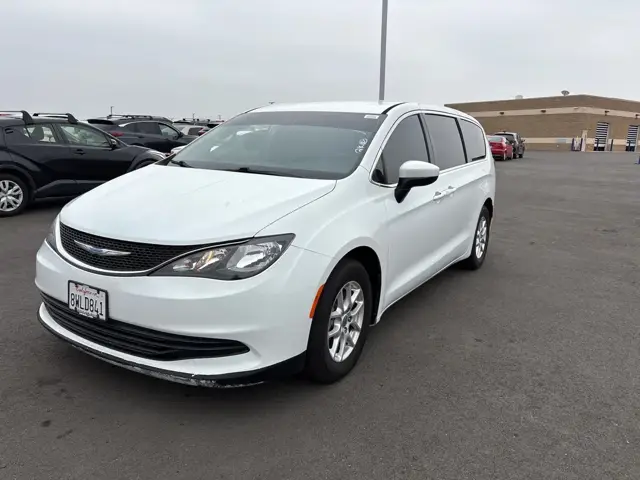
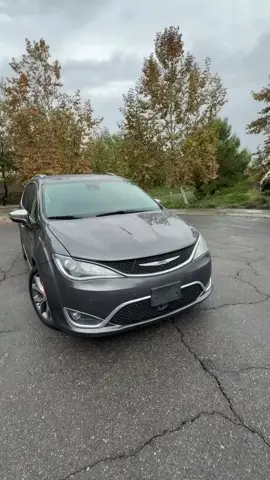
Minivans are not exciting, but for a family in Orange County they are hard to beat: easy to load, easy to park at school pickup, and comfortable on the 5 and the 405. The Chrysler Pacifica is one of the most common minivans on the road here. This used Chrysler Pacifica buyers guide walks through what actually matters when you look at one — the engine, the transmission, the doors and seats, and the paperwork — so you can judge a specific van instead of a listing.
Know which Pacifica you are looking at
The Pacifica name was reused, so start by confirming the generation. The current minivan arrived for the 2017 model year and replaced the Town & Country. (An earlier Pacifica from the mid-2000s was a crossover wagon — a completely different vehicle.)
For the current generation, check:
- Model year: the 10th character of the VIN shows the year. The door-jamb sticker shows the build month.
- Powertrain: most Pacificas are gas models with the 3.6-liter Pentastar V6 (287 horsepower) and a 9-speed automatic, front-wheel drive. All-wheel drive was added on gas models in later years. The Pacifica Hybrid is a plug-in hybrid with its own battery and electric drive system — it needs a different set of checks and is not the focus here.
- Trim: for 2018, gas trims ran from the basic L and LX through Touring Plus and Touring L to the Limited. Higher trims add things like leather, a hands-free sliding door and liftgate, a larger touchscreen, a panoramic sunroof and rear-seat screens. More features means more to test.
- Seats: most trims have Stow ‘n Go second-row seats that fold into the floor. Some versions have removable second-row seats instead, or a second-row bench. Know which one you want for your family.
The 3.6L Pentastar V6: what to check
The Pentastar is a widely used V6 across Chrysler, Dodge, Jeep and Ram vehicles, so parts and mechanics who know it are easy to find. These are the things worth checking on a used Pacifica:
- Oil leaks around the top of the engine. The oil filter housing and oil cooler sit in the valley of the V6. Look for oil residue or a burning-oil smell after the drive. A leak here is a known item on this engine family and is worth pricing if you see it.
- Cold start. Ask to see the van started cold. Listen for ticking or rattling in the first seconds that goes away, and for a rough idle.
- Oil change history. Regular oil changes matter for any engine. Gaps in the record are a reason to ask questions, not necessarily to walk away.
- Cooling system. Check the coolant level and color, and look for dried residue around the hoses and the water pump area at the front of the engine.
- Check engine light. It should come on briefly when you start the van and then go out. A light that stays on — or a dashboard with no light at all during the bulb check — needs an explanation.
The 9-speed automatic transmission
The 9-speed automatic is the part of the Pacifica buyers ask about most. Early versions of this transmission in various vehicles were known for shift-quality complaints, and the manufacturer released software updates over the years. On a test drive:
- Pull away gently from a stop several times. Shifts from first to second and second to third should be smooth, without a clunk or a slip.
- Drive in stop-and-go traffic. Hesitation when you press the gas after slowing down, or a hard downshift as you come to a stop, is worth noting.
- Get on the freeway. Check that the van settles into the top gears and cruises quietly without the engine speed hunting up and down.
- Ask about service. Ask whether the transmission has had any software updates or fluid service, and whether there are dealer invoices for it.
A short drive will not catch everything, which is why an independent inspection is a good idea on any used minivan.
Engine stop-start and the batteries
Many Pacificas have an engine stop-start system that shuts the engine off at red lights. It relies on the main battery and, on many vans, a small auxiliary battery. When those batteries get weak, you may see warnings like “stop/start unavailable” or “service stop/start system.”
- During the drive, note whether stop-start works when the engine is warm.
- Check the dash for battery or stop-start messages.
- Ask when the batteries were last replaced.
This is usually a maintenance item, not a deal-breaker, but it is good to know before you buy.
Power sliding doors, liftgate and seats
A minivan lives or dies by its doors and seats. These get used hard, so test every one:
- Sliding doors: open and close each one with the key fob, the overhead buttons and the door handle. Watch for hesitation, grinding, a door that reverses on its own or one that does not latch fully. If the van has hands-free doors, try the kick sensor too.
- Liftgate: open and close it with the button and the fob. It should move smoothly and stop if it meets an obstacle.
- Stow ‘n Go seats: fold both second-row seats into the floor and bring them back up. Fold the third row too. Check the bins under the floor for water, debris or damaged covers.
- Seat belts and child-seat anchors: pull every belt out fully and let it retract. Make sure the LATCH anchors are easy to reach.
- Rear-seat screens: if the van has them, turn them on and check the headphones and remote.
Electronics, climate and the cabin
- Uconnect screen: it should respond quickly to touch. Pair your phone, make a call and try navigation or phone projection if the van has it.
- Backup camera and sensors: check the camera image is clear and that parking sensors beep when you approach something.
- Climate control: run the air conditioning on max and check both front and rear zones. Rear air matters in Orange County summers when kids are in the back.
- Sunroof: on vans with a panoramic roof, open and close it, and look at the headliner and the cargo area for water stains.
- Smells: a musty smell can point to water getting in; check under the floor mats.
Body, tires and suspension
- Panel gaps and paint: walk around the van in good light. Uneven gaps or paint that does not match can mean past body work — compare it with the vehicle history report.
- Sliding-door tracks: look at the lower and center tracks for damage from curbs or parking-lot hits.
- Tires: check tread depth across the whole tire, inside edge included. Uneven wear can point to alignment or suspension issues.
- Suspension: drive over a speed bump slowly with the windows down. Clunks from the front end are worth investigating.
- Brakes: minivans are heavy. Listen for grinding and feel for a pulsing pedal when stopping from freeway speed.
Recalls and the vehicle history report
Like most popular vehicles, the Pacifica has had recalls over the years. Do not guess — enter the VIN at nhtsa.gov/recalls to see whether anything is open for that exact van. Recall repairs are done by a Chrysler dealer service department at no charge to the owner.
Then read the history report. It shows title status, reported accidents, odometer readings and often service visits. Our guide on how to read a Carfax report explains what to look for and what the report cannot tell you. For powertrain coverage, check the status of the manufacturer’s original coverage by VIN with the manufacturer rather than relying on a listing.
Used Chrysler Pacifica buyers guide checklist
Bring this list with you to see any used Pacifica:
- VIN, model year, trim and seat layout confirmed
- No open recalls at nhtsa.gov for this VIN
- History report read: title status, accidents, odometer, service
- Cold start: no ticking or rough idle
- No oil around the oil filter housing area on top of the engine
- Coolant at the correct level, no residue around hoses
- Smooth shifts from a stop, in traffic and on the freeway
- No battery or stop-start warnings on the dash
- Both sliding doors and the liftgate work from every control
- Second- and third-row seats fold and return; under-floor bins dry
- Screen, cameras, sensors and front and rear air conditioning work
- Even tire wear, no clunks over bumps, no brake pulsing
- Independent inspection arranged if you want one
Pacificas at 2 Drive Motors right now
We currently have two 2018 Pacificas in Lake Forest, both gas models with the 3.6L Pentastar V6 and front-wheel drive:
- The 2018 Chrysler Pacifica LX with 61,711 miles — a simpler trim with fewer powered extras to maintain.
- The 2018 Chrysler Pacifica Limited with 96,202 miles — the top gas trim, with more comfort and convenience features.
See the current price, photos and details on each car’s page. Inventory changes, so check the full inventory for what is available today.
How it works at 2 Drive Motors
We keep things simple. Call or text to set a time to see a car in person in Lake Forest, or ask for a live video walk-around first — we will open the sliding doors, fold the seats and show you the dashboard on camera. A Carfax report is available on request for every car. You are welcome to arrange an independent inspection with your own mechanic before you decide.
Every car is ready for title transfer and registration, and we prepare all the paperwork. Government tax and registration fees are itemized in writing, with no extra or hidden DMV or dealer fees — you can estimate them with the DMV fee calculator, and our article on California title transfer and DMV fees explains each step. Payment is by cash, cashier’s check, or a loan you arrange with your own bank or credit union. The full process is on our How it works page.
Want to see one of our Pacificas? Call or text (949) 989-5936, Monday to Saturday, 9:00 AM to 6:00 PM, or leave your number on any car page in our inventory and we will call you back.
Frequently asked questions
Which engine does a used Chrysler Pacifica have?
Gas versions of the current Pacifica, sold since the 2017 model year, use the 3.6-liter Pentastar V6 rated at 287 horsepower with a 9-speed automatic. A separate Pacifica Hybrid uses a plug-in hybrid system instead of the 9-speed.
Is a Pacifica with close to 100,000 miles still worth considering?
It can be, if the service history is reasonable and the transmission, cooling system and power doors check out on the test drive. Condition and records matter more than the odometer alone.
How do I check a used Pacifica for open recalls?
Enter the VIN at nhtsa.gov/recalls. It shows any open safety recalls for that exact vehicle, and a Chrysler dealer service department can complete recall work at no charge.
Does a used Pacifica need a smog check when sold in California?
Gas-powered vehicles usually need a recent passing smog check when ownership changes in California, with some exceptions for newer cars. Check the current rules on the California DMV and BAR websites for the specific model year.
Shopping for a used car in Orange County?
2 Drive Motors is an independent used-car seller in Lake Forest. A Carfax report is available on request for every car, all paperwork is prepared for title transfer, and there are no hidden DMV or dealer fees. Call or text (949) 989-5936.
This article is general information, not legal or tax advice. Rules and fees change — always confirm current requirements with the California DMV.